Beyond the Ski Town: 5 Ghost Towns You Can Visit on a Day Trip from Whitefish
December 10, 2025


Whitefish, Montana, is the perfect blend of modern mountain luxury and outdoor adventure. You have world-class skiing, pristine lakes, and fine dining right at your fingertips.
But if you peel back the layers of history in the Northern Rockies, you’ll find a grittier past. The boom-and-bust cycle of gold and silver mining left Montana speckled with hundreds of abandoned settlements, including intriguing ghost towns near Whitefish, Montana.
If you are looking to trade the paddleboard for a pair of sturdy boots and a camera, take a drive into the past. Here are five ghost towns (and near-ghost towns) you can explore on a day trip from your Whitefish basecamp.
1. Garnet, MT
Drive time from Whitefish: Approx. 2 hours, 45 minutes
Garnet is the crown jewel of Montana ghost towns and easily the best-preserved one within striking distance of Whitefish. Hidden high in the Garnet Mountain Range east of Missoula, this town once housed nearly 1,000 people during the gold rush of the late 1890s.
Today, thanks to preservation efforts, you can walk through about 30 distinct buildings. It’s a hauntingly beautiful experience to step inside the J.K. Wells Hotel or peek into the saloon, where it feels like the miners just stepped out for a moment.
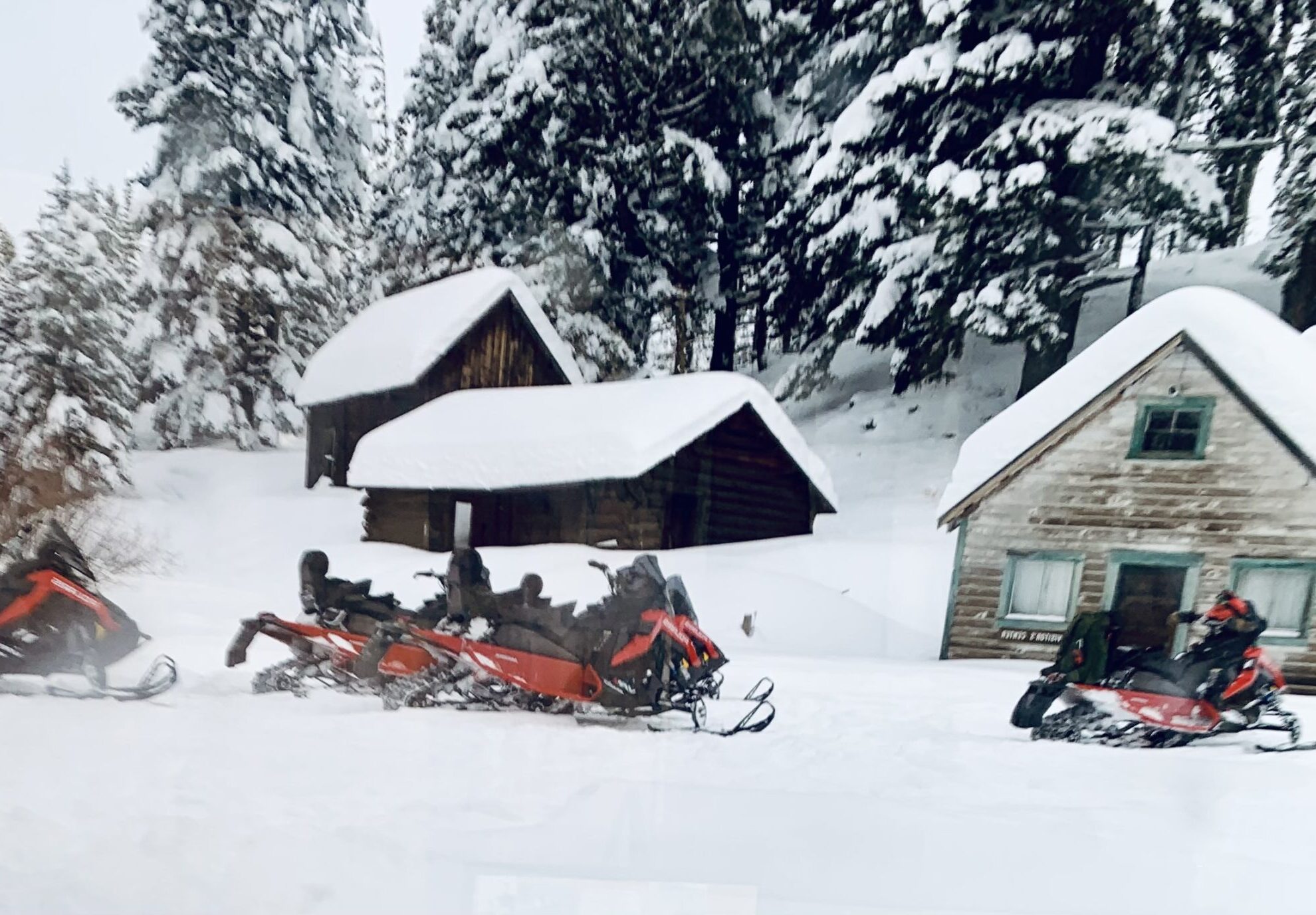
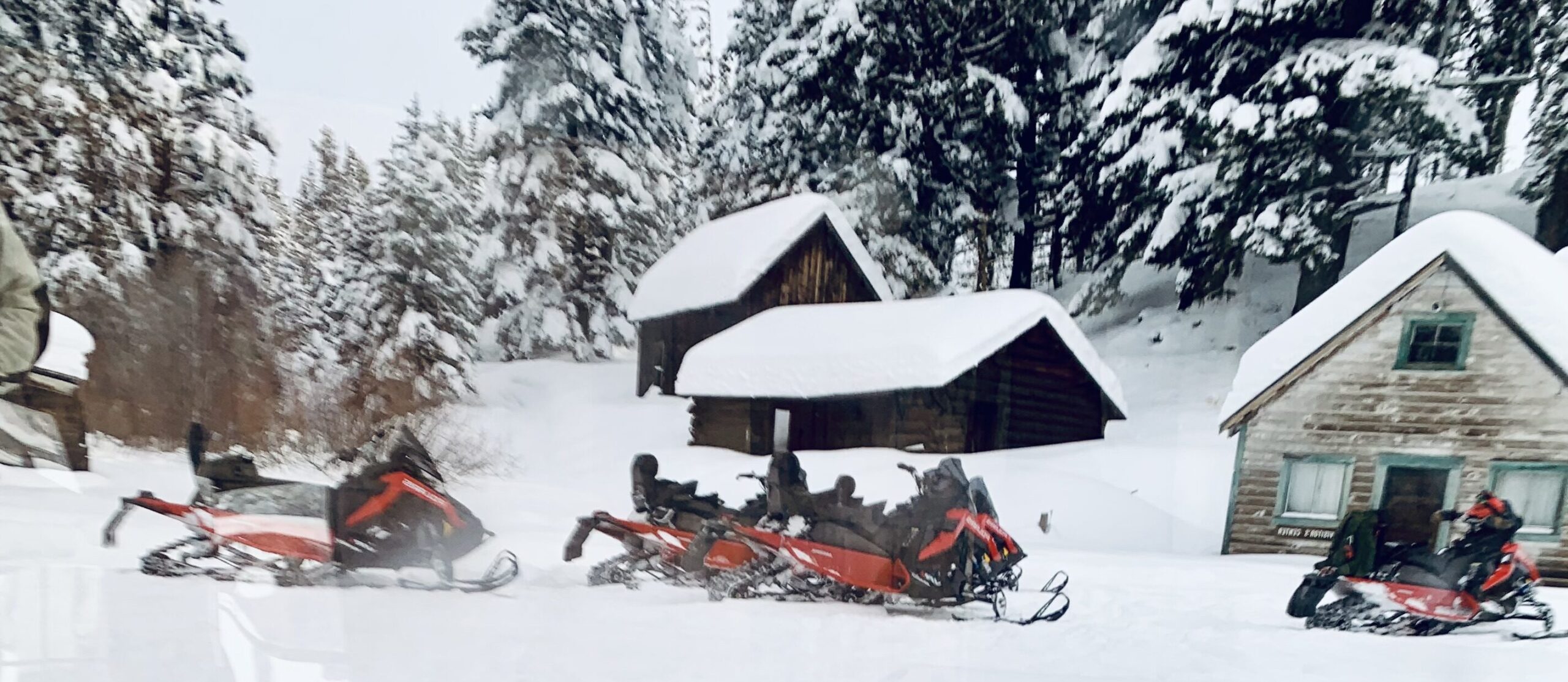
While the road is closed to wheeled vehicles in the colder months, Garnet remains accessible—and magical—in the winter. You can reach the town by snowmobile or cross-country skis, offering a stark, silent contrast to the busy summer season.
Fun Fact: Garnet is famous among paranormal investigators. Visitors frequently report hearing piano music coming from the saloon, even in the dead of winter when the town is empty of people.
2. Polebridge, MT
Drive time from Whitefish: Approx. 1 hour, 15 minutes
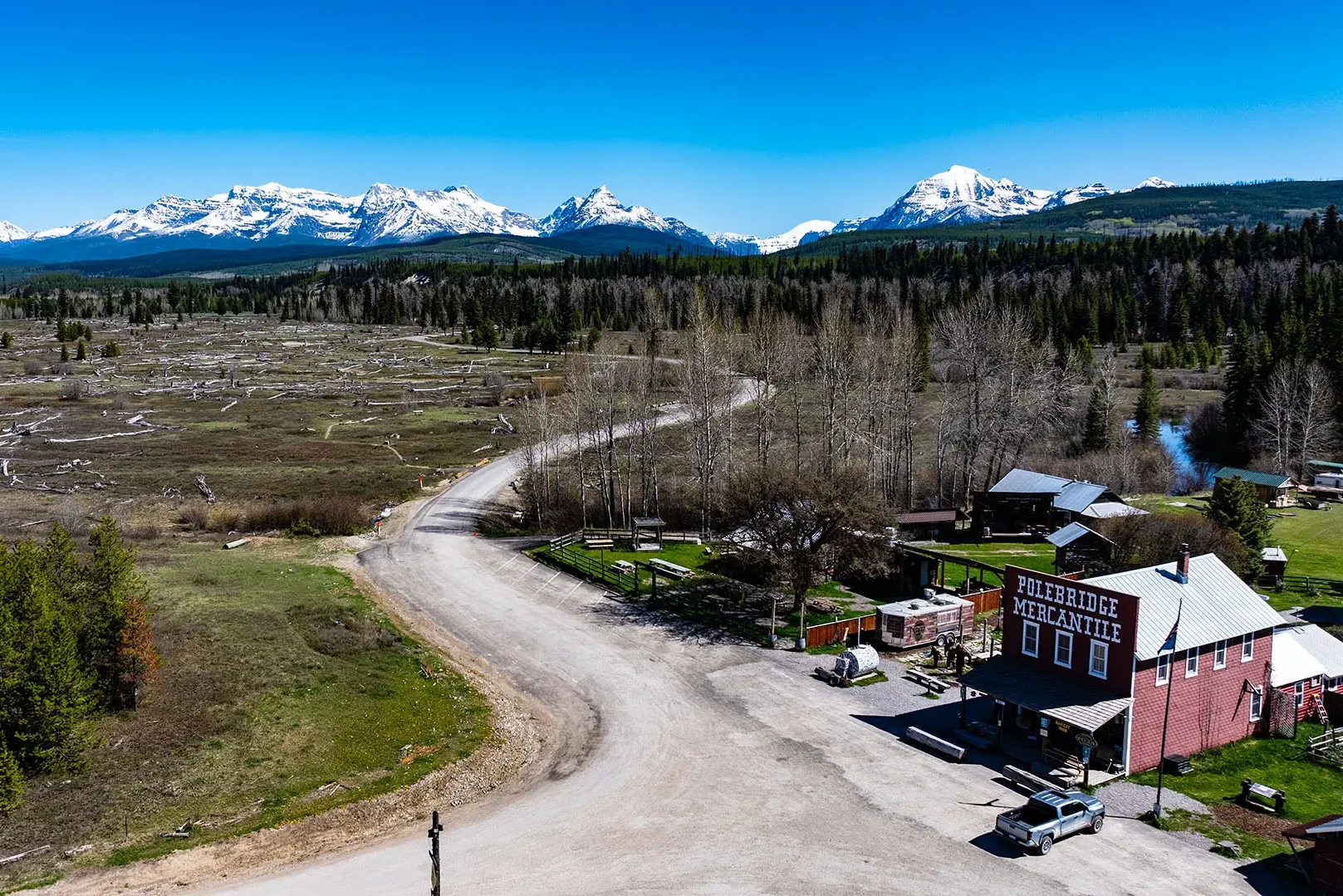
Okay, Polebridge isn’t technically abandoned, but with a year-round population you can count on two hands, it certainly feels like a remnant of a tougher era. Located on the remote western edge of Glacier National Park up the North Fork road, Polebridge feels like stepping back into 1920.
It is a rustic, dusty outpost that serves as the gateway to the wilderness. It’s the perfect spot to soak up an off-grid vibe without driving halfway across the state.
Fun Fact: Polebridge operates entirely “off-grid.” There is no electricity, cell service, or paved roads leading into town. Despite this, the historic Polebridge Mercantile (built in 1914) uses propane ovens to bake some of the most legendary huckleberry bear claws in the entire Pacific Northwest.
3. Granite State Park, MT (Near Philipsburg)
Drive time from Whitefish: Approx. 3 hours
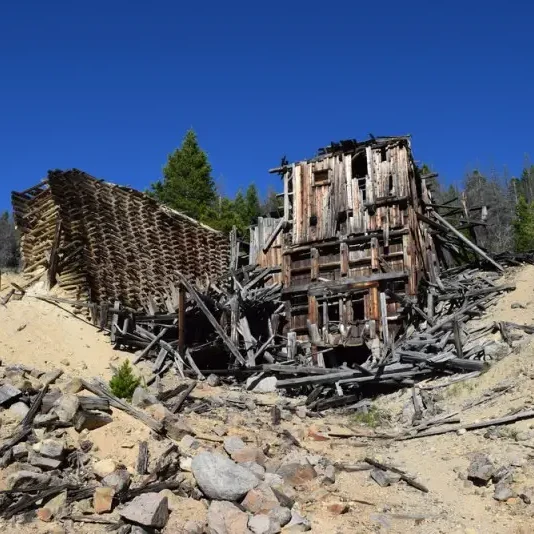
While Garnet is about preserved wooden buildings, Granite is about massive industrial ruins. Located high above the charming living town of Philipsburg, Granite was a silver mining behemoth. When the silver crash hit in 1893, the town was deserted almost overnight.
The drive up is steep and winding (an adventure in itself), leading you to the spectacular, crumbling stone skeleton of the Miners Union Hall. It feels more like ancient Roman ruins than the American West.
Fun Fact: At its peak in the late 1880s, Granite’s mines were so ridiculously lucrative that it earned the nickname “Montana’s Silver Queen.” It produced an estimated $40 million in silver—an astronomical sum at the time.
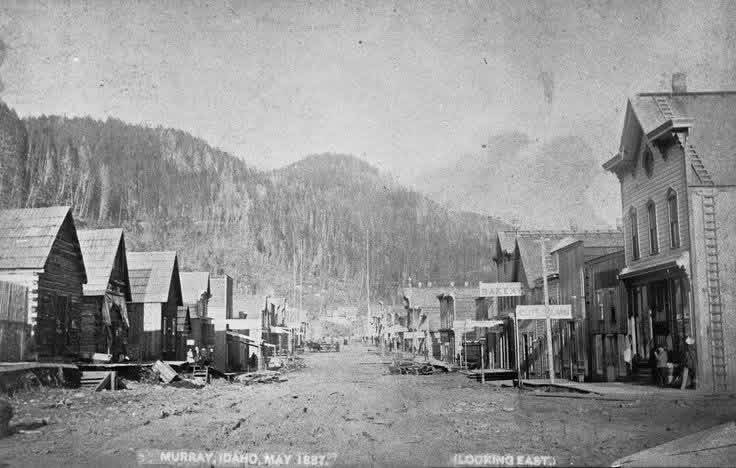
Murray, Idaho circa 1887
4. Murray, Idaho
Drive time from Whitefish: Approx. 2 hours, 30 minutes
Head west across the border into the Idaho Panhandle National Forests to find Murray. This area was the site of a massive gold rush in the Coeur d’Alene mountains in the 1880s.
Murray is a “semi-ghost town.” A handful of people still live in the area, and there is a fantastic, quirky museum and an operating historic bar (the Sprag Pole). Walking the main street feels authentic, wild, and a little lawless compared to the more manicured tourist towns.
Fun Fact: Murray was formerly home to the legendary Maggie Hall, better known as “Molly b’Damn.” She was a famous madam with a heart of gold, renowned for nursing miners through smallpox epidemics when no one else would touch them. You can still visit her gravesite today.
5. Marysville, MT
Drive time from Whitefish: Approx. 3 hours, 30 minutes
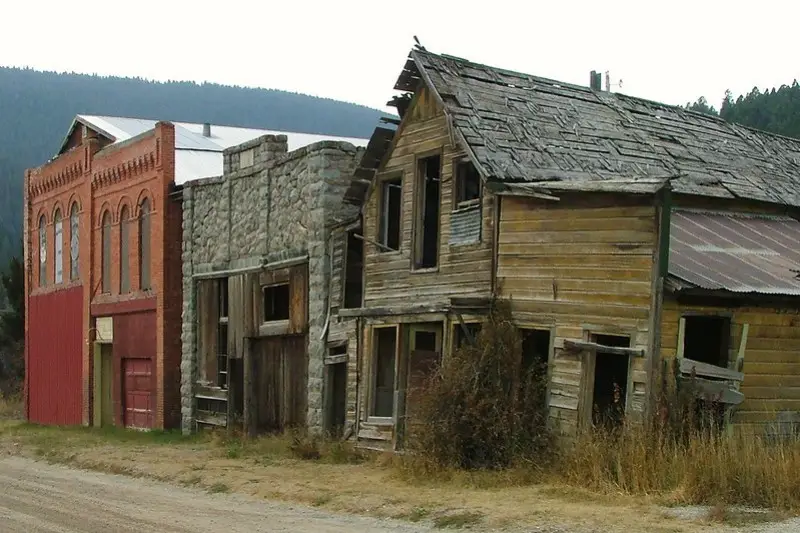
This is a longer day trip, best combined with a visit to Montana’s capital city, Helena. Nestled near the Great Divide ski area, Marysville is a quiet collection of weathered buildings shadowed by historic mine structures.
It has a sleepy, forgotten atmosphere that photographers love. It sits right at the base of the mountain that made it rich, offering great views and a true sense of isolation.
Fun Fact: The town exists because of Irish immigrant Thomas Cruse. After years of failing to find gold, he discovered the massive “Drumlummon” lode here. He went from penniless to a millionaire overnight, eventually selling the mine for $1.5 million in 1880s cash and moving to Helena to build a banking empire.
Know Before You Go:
Road Conditions: Most ghost towns are reached via dirt or gravel forest service roads. While usually passable in a sedan during high summer, an SUV with higher clearance is recommended.
Seasons Matter: These trips are best from late June through September. However, places like Garnet offer unique winter access via snowmobile or ski.
Fill Up: Gas stations are rare in these remote areas. Always leave Whitefish with a full tank.
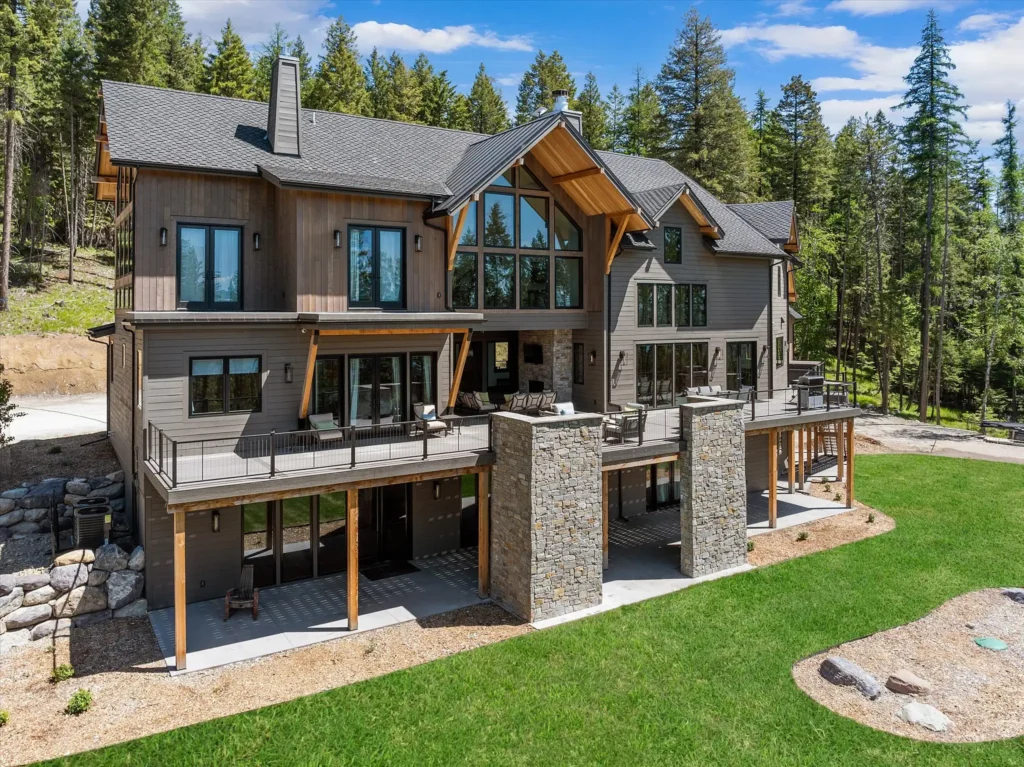
Make Great Northern Mountain Escape in Whitefish, Montana, your Montana Adventures home base!
Check the latest rates and availability here.
+ Show / Hide Comments
Share to: